
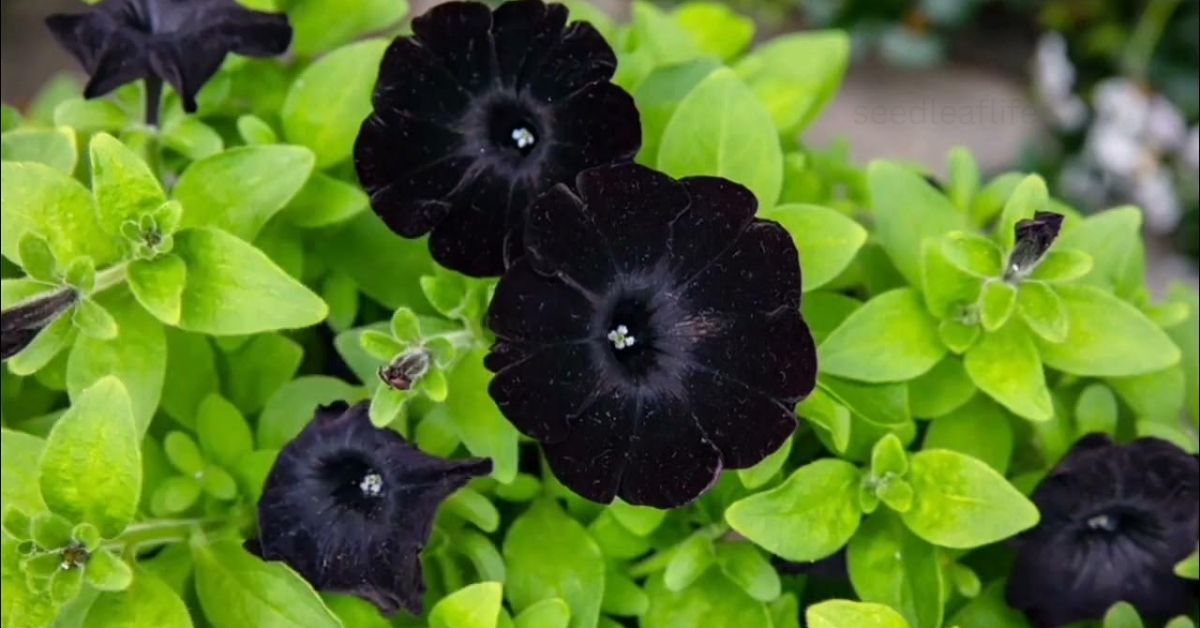
Black petunias are among the most dramatic and eye-catching flowers you can grow. Their deep, velvety color—often appearing jet black or dark purple—adds sophistication, contrast, and modern elegance to gardens and containers.
For gardeners looking to create bold visual impact, black petunias are an excellent choice.
In this comprehensive guide, you’ll learn everything about black petunias—from popular varieties and growing tips to care, design ideas, and common problems—so you can enjoy healthy, stunning blooms all season long.
What Are Black Petunias?
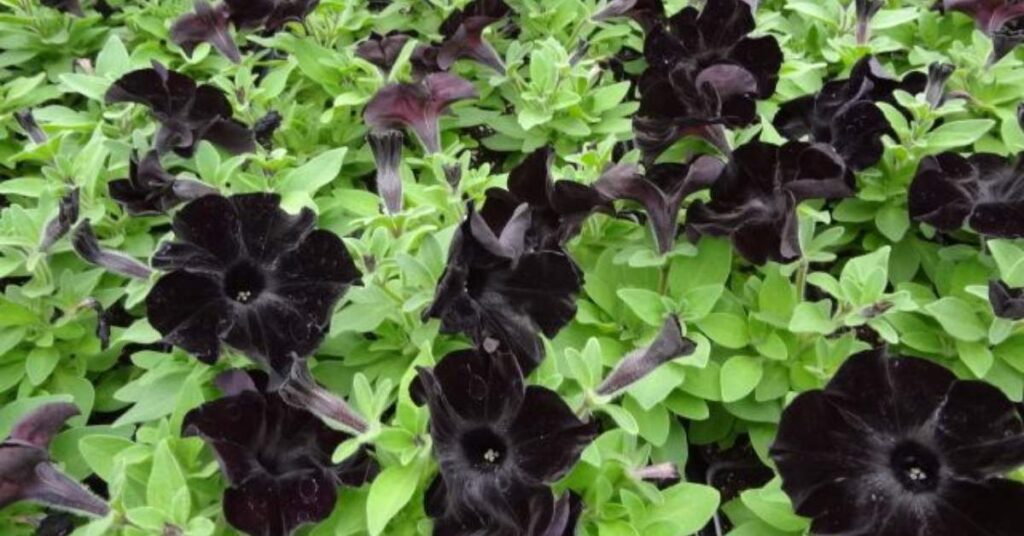
Black petunias are hybrid varieties of Petunia , hybrid bred to produce extremely dark flowers that appear black. While no flower is truly pitch black, these petunias come very close, showing shades of deep burgundy, plum, or near-black velvet.
They are prized in ornamental gardening for their unusual color, versatility, and long blooming season.
Why Black Petunias Are So Popular
- Unique & Dramatic Appearance – Creates bold contrast in gardens
- Design Versatility – Perfect for modern, gothic, and cottage gardens
- Long Blooming Season – Flowers from spring until first frost
- Easy Maintenance – Similar care needs to regular petunias
Popular Varieties
1. Black Velvet Petunia
The most well-known variety.
Key Features:
- Deep velvety black blooms
- Large trumpet-shaped flowers
- Compact growth habit
Ideal for containers and garden borders.
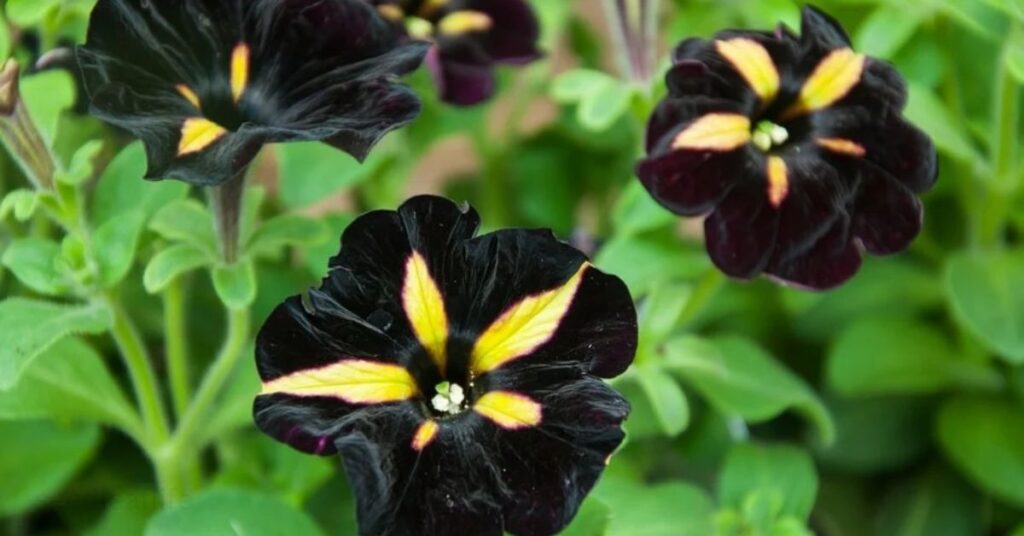
2. Phantom Petunia
A striking variety with a black base and yellow star pattern.
Why It Stands Out:
- Rare and exotic look
- High visual contrast
- Excellent focal plant
3. Black Cat Petunia
A newer hybrid with consistent dark coloring.
Advantages:
- Better weather resistance
- Continuous blooming
- Excellent for pots
4. Night Sky (Dark Types)
Not true black, but offers deep purple-black tones with speckles.
How to Grow Black Petunias
Climate Requirements
Black petunias thrive in:
- Warm to moderate climates
- Full sun to partial shade
- Frost-free growing seasons
Ideal temperature: 15–30°C (60–85°F)
Soil Requirements
- Well-draining soil
- Slightly acidic to neutral pH (6.0–7.0)
- Rich in organic matter
Avoid heavy clay soils that retain water.
Planting Black Petunias
When to Plant
- After the last frost
- Late spring is best
How to Plant
- Dig a hole twice the size of the root ball
- Space plants 20–30 cm apart
- Water thoroughly after planting
Caring for Petunias
Watering
- Water regularly, but don’t overwater
- Let topsoil dry slightly between watering
- Containers may need daily watering in summer
Sunlight
- Minimum 6 hours of direct sunlight
- Too much shade reduces blooms
- Full sun enhances dark color
Fertilizing
Black petunias are heavy feeders.
Best Practices:
- Balanced liquid fertilizer every 2 weeks
- Slow-release fertilizer at planting
- Avoid excess nitrogen
Deadheading & Pruning
- Remove spent flowers regularly
- Pinch back leggy stems
- Encourages bushier growth and more blooms
Growing Black Petunias in Containers
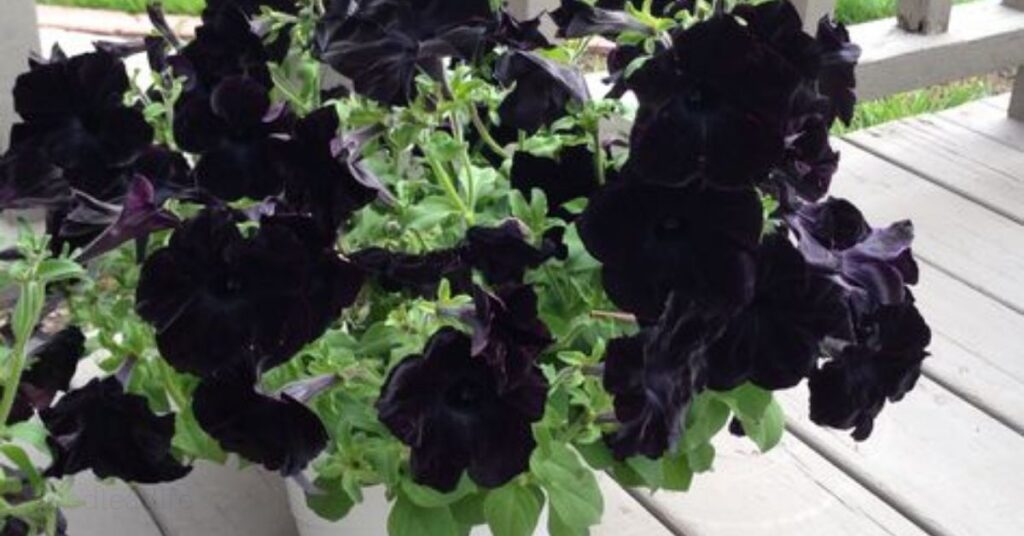
Black petunias perform beautifully in pots and hanging baskets.
Container Tips:
- Use pots with drainage holes
- Choose contrasting or dark containers
- Combine with trailing plants
Best Companion Plants
To highlight black petunias, pair them with:
- White petunias
- Dusty miller (silver foliage)
- Yellow calibrachoa
- Pink or purple verbena
- To highlight black petunias, pair them with white petunias, dusty miller (silver foliage), yellow calibrachoa, or pink/purple verbena.
Contrast is key when designing with dark flowers.
Design Ideas
1. Modern Garden
Minimalist planters with clean lines.
2. Gothic or Dramatic Style
Pair with dark foliage and deep reds.
3. Cottage Garden
Mix with pastel flowers for contrast.
4. Hanging Baskets
Let blooms cascade for dramatic effect.
Common Problems & Solutions
Poor Flowering
Caused by:
- Lack of sunlight
- Excess nitrogen
- No deadheading
Faded Color
- Extreme heat
- Low sunlight
- Nutrient imbalance
Pests
Common pests include:
- Aphids
- Spider mites
- Whiteflies
Use insecticidal soap if needed.
Annual or Perennial?
They are annuals in most climates. They bloom continuously until frost and complete their life cycle in one season.
Propagation
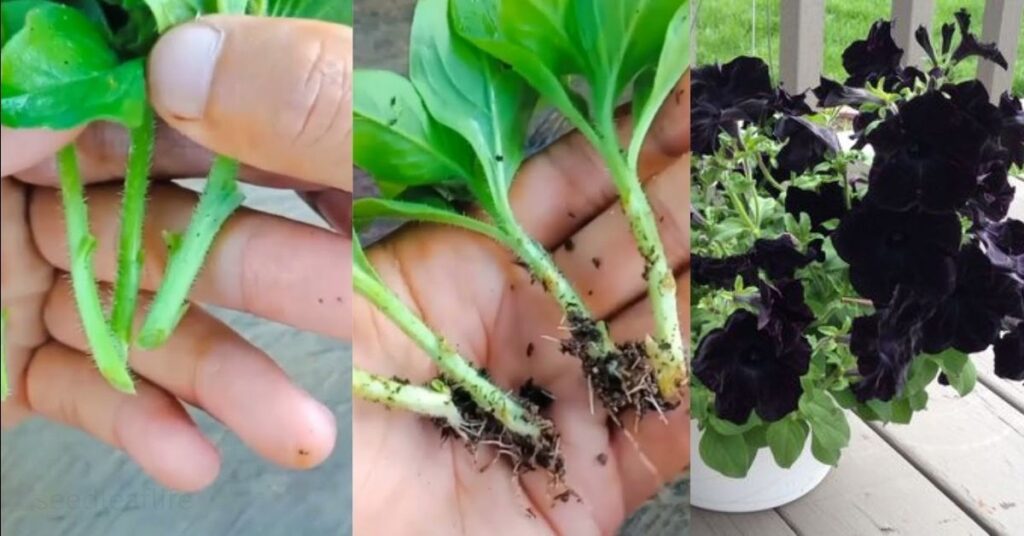
Most black petunias are hybrids and grown from:
- Nursery seedlings
- Cuttings (limited success)
Seeds rarely produce true black color.
Seasonal Care Tips
Spring: Plant after frost, start feeding
Summer: Water consistently, deadhead
Fall: Enjoy blooms until frost, remove plants
Benefits of Growing
- Unique visual appeal
- Long flowering season
- Ideal for small spaces
- Easy to grow
- Perfect for creative garden designs
FAQs
Are black petunias really black?
They are very dark purple or burgundy and appear black in most light.
Do black petunias fade?
Strong sunlight maintains color, but extreme heat may cause slight fading.
Can black petunias grow indoors?
They need strong light—balconies or outdoor spaces work best.
Do they attract pollinators?
Yes, bees and butterflies love them.
Conclusion
Black petunias are a stunning and sophisticated addition to any garden or container display. Their velvety dark blooms create unmatched contrast and elegance, making them a favorite among modern gardeners.
With proper sunlight, regular feeding, and consistent care, they will reward you with dramatic blooms all season long. Whether used as focal plants, mixed with bright companions, or cascading from hanging baskets, they make a bold and unforgettable garden statement.