
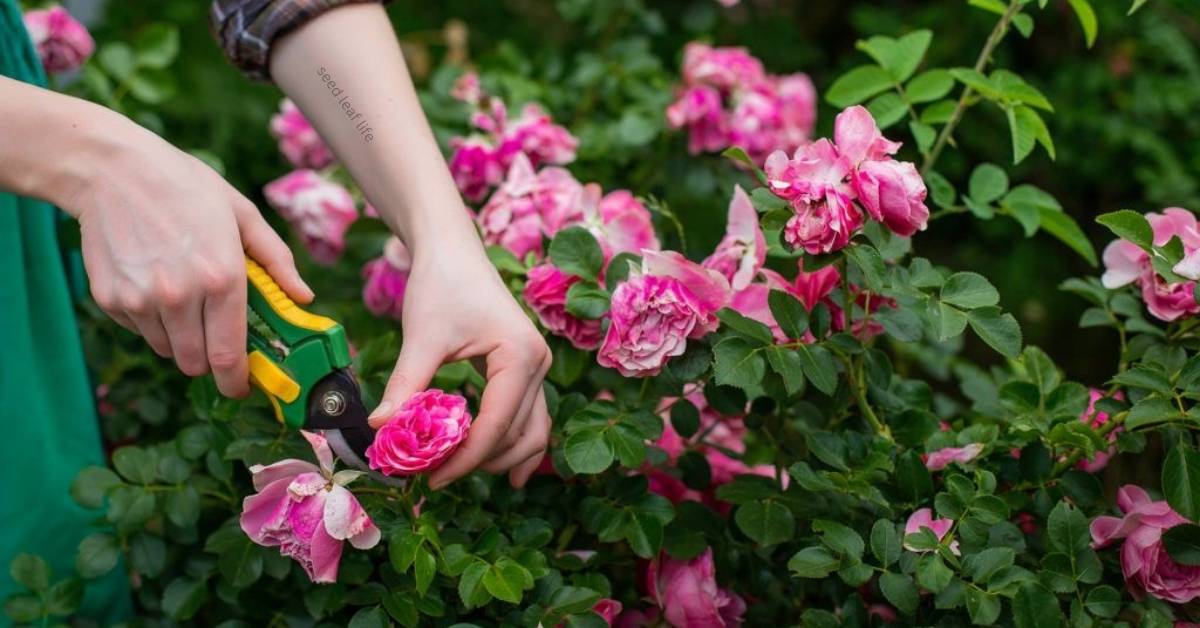
Pruning of rose plant is not just a gardening task—it is the single most important practice that decides whether your roses merely survive or truly thrive. Many gardeners admire rose plants for their elegance, fragrance, and vibrant blooms, yet struggle to achieve consistent flowering year after year.
The reason is often simple: improper or neglected pruning. When done correctly, pruning transforms a weak, tangled rose bush into a healthy, well-shaped plant that produces larger, more frequent, and longer-lasting flowers.
Roses are naturally vigorous growers. Without pruning, they become overcrowded with old, unproductive wood, restricting airflow and sunlight. This creates the perfect environment for diseases such as black spot and powdery mildew, while also reducing bloom quality.
Pruning of rose plant removes this dead and diseased growth, redirects energy to strong new shoots, and encourages the plant to focus on flowering rather than survival. In essence, pruning acts as a reset button that rejuvenates the entire plant.
For many beginners, pruning roses feels intimidating. Questions like when to prune rose plants, how much to cut, or whether pruning will damage the plant often lead to hesitation or mistakes. Some gardeners prune too aggressively, while others avoid pruning altogether, fearing they might kill the plant.
Understanding the Rose Plant Growth Cycle
To master the pruning of rose plant, it is essential to first understand how a rose plant grows throughout the year. Roses follow a natural growth cycle that directly influences when and how they should be pruned. Pruning at the right stage supports healthy development, while incorrect timing can reduce flowering or weaken the plant.
The growth cycle of a rose plant begins with dormancy, usually during late autumn and winter. During this phase, the plant conserves energy, and growth activity slows down significantly. Leaves may drop, and the stems appear bare. This is the most important period for major pruning, as the plant can tolerate heavy cuts without stress. Pruning during dormancy encourages strong, fresh growth once the plant becomes active again.
As temperatures rise, the rose plant enters the active growth stage. Buds begin to swell, and new shoots emerge from the pruned canes. This stage is critical because roses produce flowers mainly on new wood, meaning the fresh growth that develops after pruning. Proper pruning during dormancy ensures that these new shoots are strong, well-spaced, and capable of producing quality blooms.
The next phase is flowering, where the rose plant channels its energy into bud formation and bloom production. Healthy, well-pruned plants produce larger and more frequent flowers during this stage. Light pruning or deadheading after blooms fade helps extend the flowering period by stimulating new bud development.
Finally, the plant enters a pre-dormant or resting phase as temperatures drop again. Growth slows, and the plant prepares for dormancy. During this time, heavy pruning should be avoided, as it can stimulate unwanted growth that may be damaged by cold weather.
By pruning at the correct stage, you ensure healthier growth, better structure, and a more abundant display of beautiful roses season after season — and you can also explore beneficial companion plants for roses here:
Why Pruning of Rose Plant Is Important
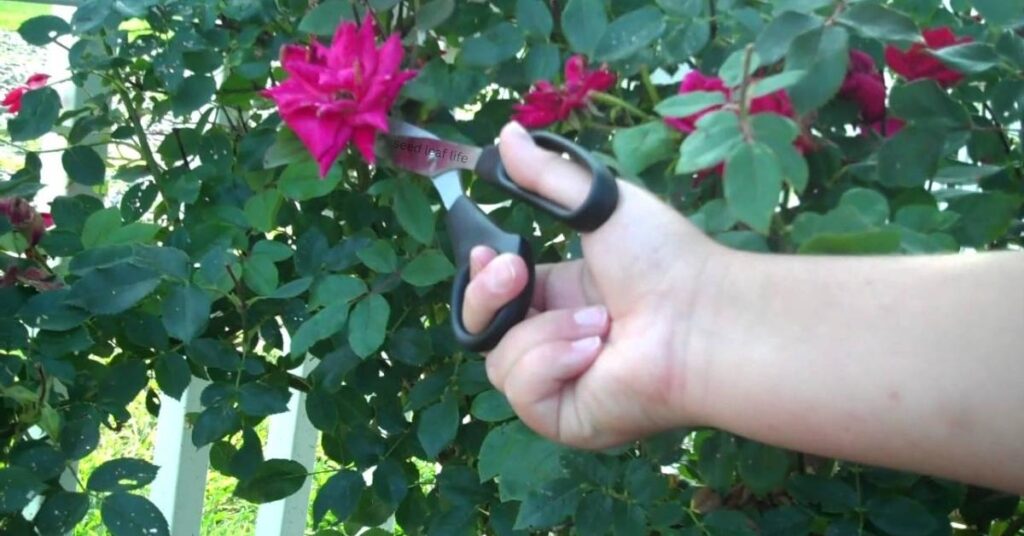
Pruning of rose plant is not an optional gardening practice—it is a vital process that directly affects the health, appearance, and flowering performance of the plant. Roses are vigorous growers, and without regular pruning, they quickly become overcrowded, weak, and less productive.
One of the primary benefits of pruning is that it encourages more and better-quality flowers. Rose plants bloom mainly on new growth. When old, unproductive stems are removed, the plant redirects its energy into producing strong new shoots that are capable of supporting larger and more vibrant blooms.
Pruning of rose plant is also essential for maintaining plant health. Dead, diseased, or damaged branches act as entry points for pests and fungal infections such as black spot, powdery mildew, and rust. By removing these unhealthy parts, pruning reduces the risk of disease spread and keeps the plant strong.
Another important reason for pruning is shape and structural control. Rose plants naturally grow in different directions, often becoming leggy or uneven if left unattended.
Pruning also plays a key role in controlling the size of the rose plant. Whether roses are grown in garden beds or containers, regular pruning prevents them from becoming too large or unmanageable. This makes ongoing care, such as watering, fertilizing, and pest control, much easier.
Best Time for Pruning of Rose Plant
Choosing the best time for pruning of rose plant is crucial, as timing directly affects plant health, growth strength, and flowering performance. Pruning at the wrong time can reduce blooms, weaken the plant, or expose new growth to environmental stress. Understanding seasonal patterns and climate conditions helps ensure successful pruning.
For most rose varieties, the ideal time for major pruning is late winter to early spring, just before the plant comes out of dormancy. During this period, rose plants are resting, and cutting them back does not cause shock. As temperatures begin to rise, the plant responds to pruning by producing vigorous new shoots, which later develop into flower-bearing stems. A clear sign that it is time to prune is swollen buds on the canes, indicating that the plant is ready for active growth.
In regions with mild winters, pruning may be done slightly earlier, while in cold climates, it is best to wait until the risk of severe frost has passed. Pruning too early in cold conditions can stimulate new growth that may be damaged by frost, setting the plant back rather than helping it. Gardeners should always observe local weather patterns rather than relying solely on calendar dates.
Spring pruning focuses on shaping the plant and removing any winter-damaged wood. Light pruning can also be done during spring to control growth and improve airflow. Summer pruning, on the other hand, is generally limited to deadheading—removing spent flowers. Deadheading encourages repeat blooming and prevents the plant from wasting energy on seed production. Heavy pruning during summer is not recommended, as it can stress the plant during hot weather.
Autumn pruning should be minimal. While it may be tempting to tidy up the plant, heavy pruning at this time can trigger new, tender growth that is vulnerable to cold damage. In most cases, autumn pruning should be limited to removing diseased, broken, or excessively long stems that could be damaged by wind.
Climate also plays a key role in determining the best time for pruning of rose plant. In tropical and subtropical regions, roses may not experience full dormancy, so pruning is often done once a year after the main flowering cycle. In cooler regions, a strict winter pruning schedule works best.
By pruning at the right time and adjusting techniques according to climate and season, gardeners can ensure stronger growth, healthier plants, and a more abundant display of roses throughout the year.
Types of Roses and Their Pruning Requirements
Understanding the different types of roses is essential for successful pruning of rose plant, as each variety has its own growth habit and flowering pattern. Applying the same pruning method to all roses can lead to poor flowering or weak growth. Tailoring your pruning approach to the specific type of rose ensures healthier plants and better blooms.
Hybrid tea roses are among the most popular garden roses and require the most rigorous pruning. These roses produce large, single blooms on long stems and flower best on strong new growth. During the main pruning season, hybrid tea roses should be cut back hard, usually leaving three to five healthy canes and reducing their height to about one-third of the plant. Removing weak and inward-growing stems helps create an open structure that supports large, high-quality flowers.
Floribunda roses have a bushier growth habit and produce clusters of flowers rather than single blooms. Their pruning requirements are less severe than hybrid teas. Floribundas benefit from moderate pruning, where the plant is reduced by about one-half in height. Old and weak stems should be removed, but more canes are left compared to hybrid tea roses to support multiple flowering clusters. This approach encourages continuous blooming throughout the season.
Climbing roses require a different pruning strategy altogether. These roses flower on long, arching canes, often on wood that is two years old. Heavy pruning can drastically reduce flowering. Instead of cutting back all canes, focus on removing dead or damaged stems and tying healthy canes horizontally to encourage side shoots. Flowering laterals can be lightly pruned to maintain shape and promote blooms.
Shrub roses and landscape roses are generally low-maintenance and require minimal pruning. These roses are grown for their natural form and repeat flowering. Pruning usually involves removing dead, diseased, or crossing branches and lightly shaping the plant. Hard pruning is rarely necessary unless the plant becomes overgrown or woody.
Miniature roses, despite their small size, benefit from regular pruning similar to larger roses. Dead and weak stems should be removed, and the plant should be lightly shaped to maintain its compact form. Miniature roses respond well to pruning and quickly produce new flowering shoots.
Tools Required for Pruning of Rose Plant
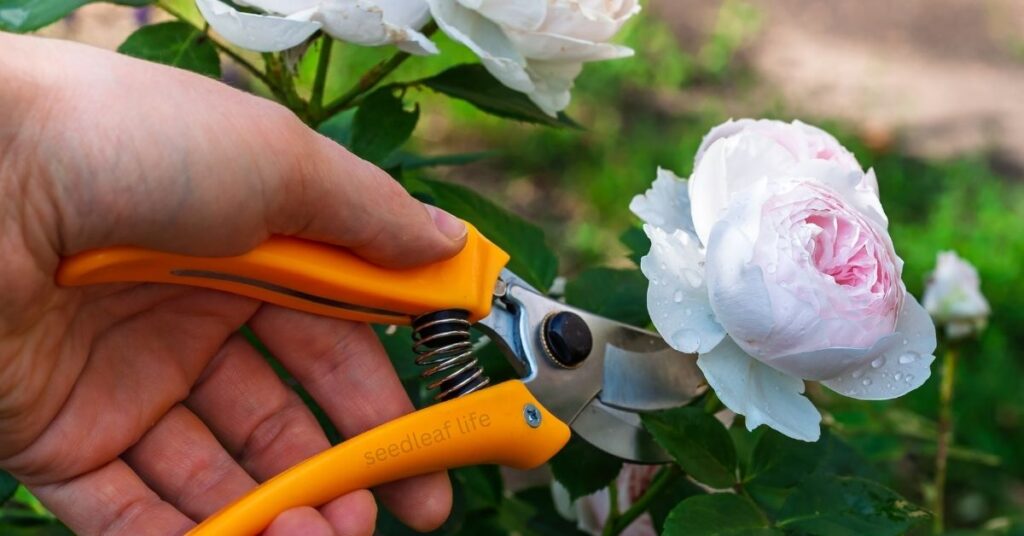
Using the right tools is a crucial part of effective pruning of rose plant. Proper tools make clean, precise cuts that heal quickly, while poor-quality or inappropriate tools can damage stems and increase the risk of disease.
The most important tool for pruning roses is a pair of sharp secateurs (hand pruners). These are ideal for cutting stems up to the thickness of a pencil or finger. Bypass pruners are preferred over anvil pruners because they make cleaner cuts without crushing the stem tissue.
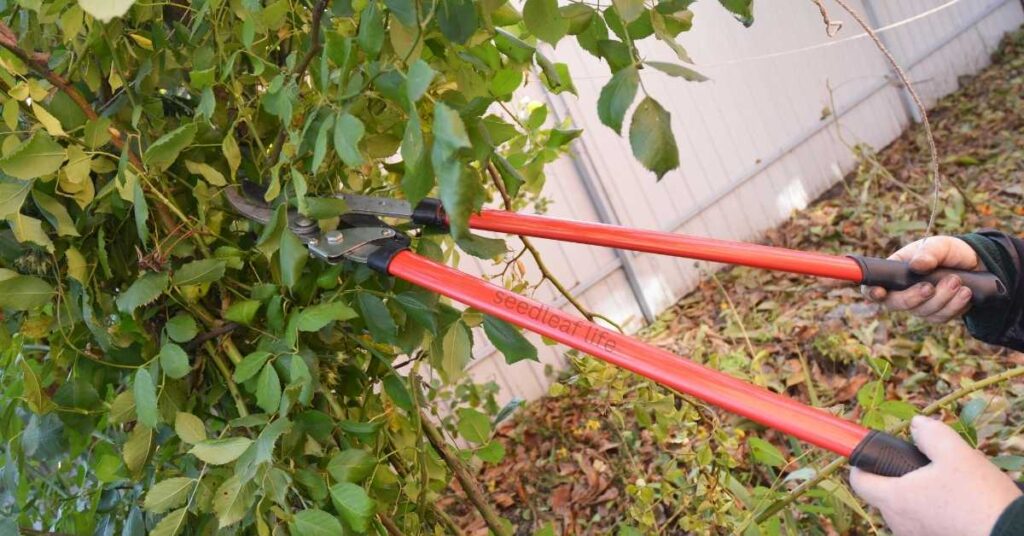
For thicker or woody stems, loppers are extremely useful. Loppers have long handles that provide extra leverage, making it easier to cut through mature canes that are too thick for hand pruners.
In cases where very thick, hardened wood needs to be removed, a pruning saw may be required. Pruning saws are designed to cut through tough branches without tearing the plant.
Tool maintenance is just as important as tool selection. All pruning tools should be clean and well-sharpened before use. Sterilizing blades with alcohol or a disinfectant solution prevents the spread of diseases from one plant to another.
Safety should never be overlooked. Thick gardening gloves protect hands from thorns, while long sleeves help prevent scratches.
How to Prune a Rose Plant Step by Step
Pruning of rose plant becomes simple and effective when approached in a systematic, step-by-step manner. Following the correct sequence ensures clean cuts, balanced growth, and maximum flowering while minimizing stress to the plant.
Step 1: Inspect the Rose Plant Carefully
Begin by closely examining the entire plant. Identify dead, diseased, damaged, or weak stems. Dead wood appears brown or black and is often dry and brittle, while healthy canes are green and firm. Also look for crossing branches, inward-growing stems, or shoots emerging from below the graft union.
Step 2: Remove Dead, Diseased, and Weak Growth
Start pruning by removing all dead, diseased, or damaged stems at their base. This is the most critical step, as unhealthy wood drains energy and can spread disease. Weak, thin stems that are unlikely to produce strong flowers should also be removed.
Step 3: Cut Out Crossing and Inward-Growing Stems
Next, remove stems that cross or rub against each other, as friction can cause wounds that invite pests and infections. Inward-growing canes should also be removed to create an open, vase-like structure.
Step 4: Make Proper Pruning Cuts
When making cuts, always use sharp, clean tools. Cut at a 45-degree angle, about 0.5 to 1 cm above an outward-facing bud. The angled cut allows water to run off and prevents rot, while the outward-facing bud encourages growth away from the center of the plant.
Step 5: Shape the Rose Plant
After removing unwanted growth, focus on shaping the plant. Depending on the rose type, reduce the remaining healthy canes to the appropriate height. For most bush roses, cutting back by one-third to one-half of the plant’s height is ideal.
Step 6: Remove Suckers and Excess Growth
Suckers are fast-growing shoots that emerge from below the graft union and do not produce desirable flowers. These should be removed completely by cutting them off as close to their origin as possible.
Step 7: Clean Up After Pruning
Once pruning is complete, collect and dispose of all cuttings, especially diseased material. Leaving debris around the plant can attract pests and harbor diseases.
By following these steps carefully, pruning of rose plant becomes a controlled and beneficial process that encourages strong growth, improves plant structure, and results in abundant, high-quality blooms throughout the growing season.
Pruning of Rose Plant in Pots and Containers
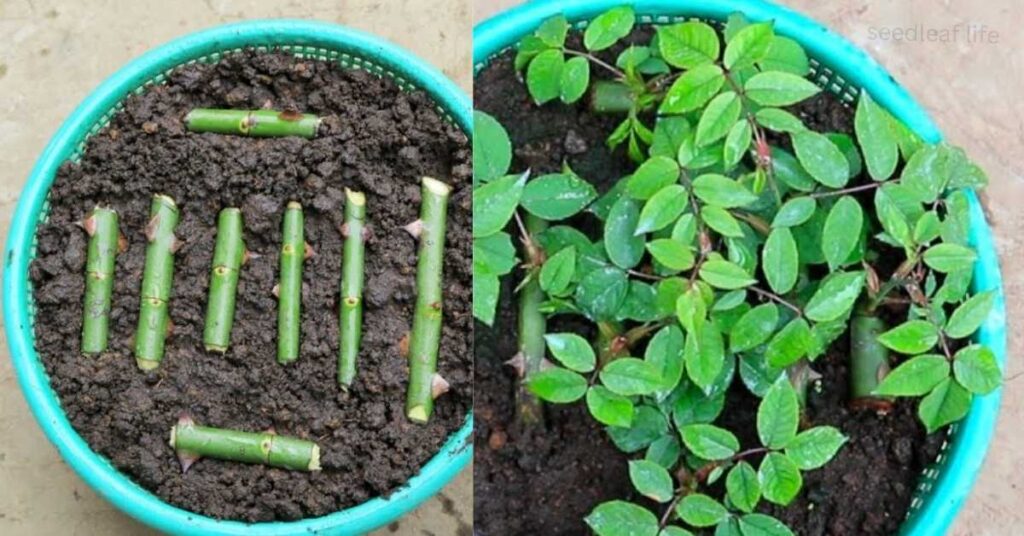
Pruning of rose plant grown in pots and containers requires special attention, as these plants have limited space for root growth compared to roses planted in the ground.
One of the main differences with potted roses is size control. Roses in containers can become root-bound over time, and excessive top growth puts extra stress on the roots. Regular pruning helps keep the plant compact and prevents it from becoming too large for its pot.
Start by removing dead, diseased, or weak stems, just as you would with ground-planted roses. These unproductive stems consume valuable nutrients and reduce airflow, which is especially important in containers where moisture levels can fluctuate.
When pruning roses in pots, pay close attention to the overall height and shape of the plant. Cutting back healthy canes by one-third to one-half of their length helps maintain a balanced form and prevents the plant from becoming top-heavy.
Another important aspect is root-to-shoot balance. If a rose plant has recently been repotted or its roots have been trimmed, the top growth should also be pruned accordingly.
After pruning, container roses need careful aftercare. Water the plant thoroughly to help it recover, but avoid waterlogging. Applying a light dose of balanced fertilizer after new growth begins supports healthy shoot development.
Pruning of rose plant in containers, when done correctly, keeps the plant healthy, compact, and productive.
Aftercare Tips Following Rose Plant Pruning
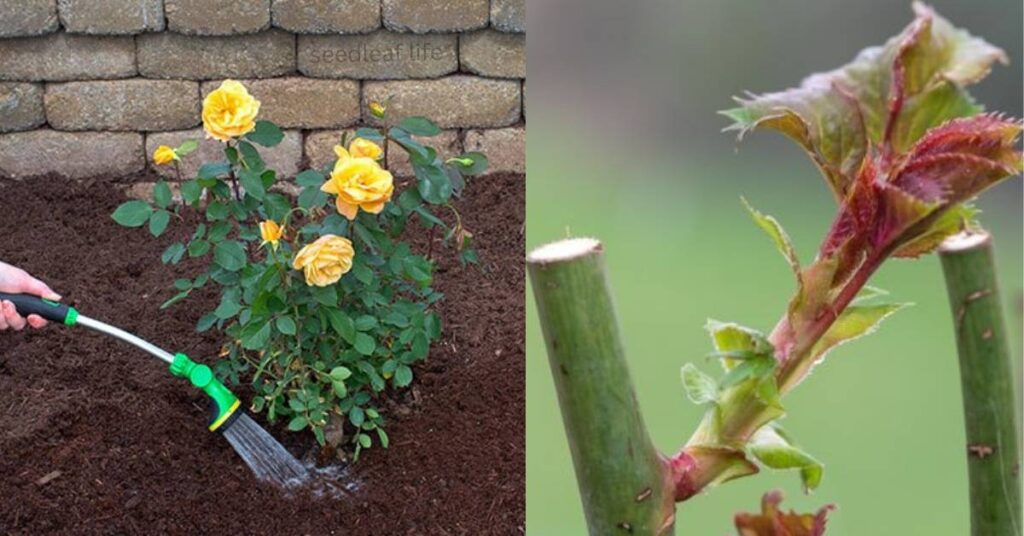
Proper aftercare following pruning of rose plant is just as important as the pruning process itself. After pruning, rose plants enter a recovery phase where they rely on good care to heal quickly and produce strong new growth.
Watering is the first essential step after pruning. Newly pruned roses should be watered deeply to help the roots absorb nutrients and support fresh shoot development.
Fertilizing should be timed carefully. Immediately after heavy pruning, avoid strong fertilizers, as they may stress the plant. Once new growth begins to appear, usually after a couple of weeks, apply a balanced rose fertilizer or organic compost.
Mulching plays a significant role in protecting the plant after pruning. A layer of organic mulch, such as compost, bark chips, or well-rotted manure, helps retain soil moisture, suppress weeds, and regulate soil temperature.
Monitoring for pests and diseases is especially important after pruning. Fresh cuts can attract insects and create entry points for fungal infections. Regularly inspect the plant for signs of aphids, mites, or disease spots on new leaves.
Pruned rose plants also benefit from proper sunlight and airflow. Ensure that the plant receives adequate sunlight, as this supports photosynthesis and strong growth. Good air circulation around the plant reduces humidity and helps prevent fungal diseases.
Lastly, avoid further heavy pruning until the plant has fully recovered and established new growth. Gentle maintenance tasks like deadheading spent blooms can be done later to encourage continued flowering.
Pruning Rose Plant for Maximum Flowering
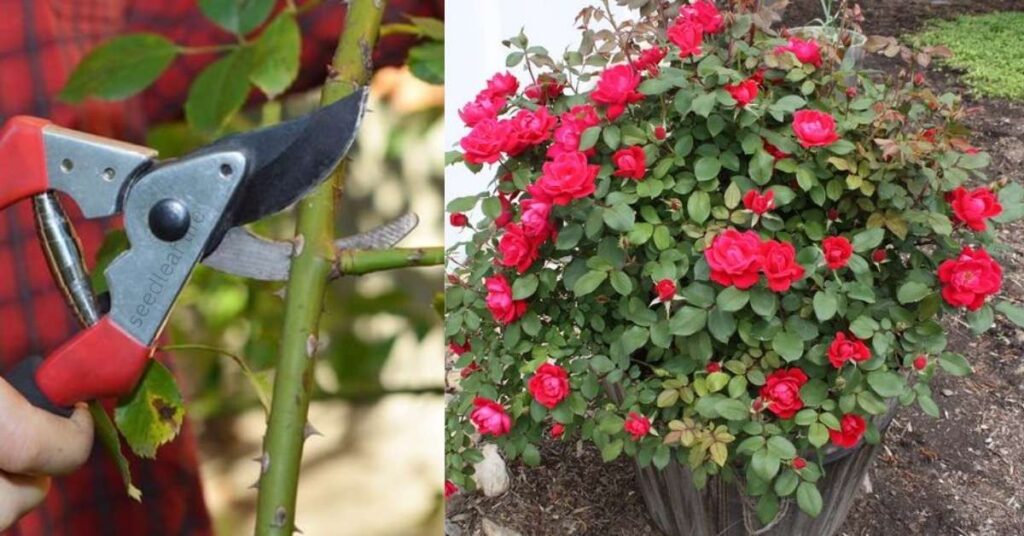
Pruning of rose plant is not only about keeping the plant healthy—it is also the key to achieving maximum flowering. Roses bloom primarily on new growth, so strategic pruning encourages the plant to produce strong, flower-bearing shoots that result in more abundant and vibrant blooms throughout the season.
The first step in pruning for maximum flowering is removing dead, diseased, and weak stems. These unproductive canes drain the plant’s energy, reducing the resources available for bloom development.
Next, attention should be given to shaping the plant for optimal growth. Roses flower best when light and air can reach all parts of the plant. Creating an open, vase-like structure by removing inward-growing or crossing stems allows sunlight to penetrate, stimulating bud formation and preventing fungal diseases that can inhibit flowering.
Cutting above outward-facing buds is another crucial technique. When pruning, make clean angled cuts just above these buds. This encourages shoots to grow outward rather than inward, creating space for more blooms and a balanced plant structure. Avoid leaving stubs, as they can die back or become disease entry points.
Timing is equally important. For most roses, late winter or early spring pruning encourages strong new growth that will bloom during the growing season. Light pruning after the first round of flowering, known as deadheading, also prolongs bloom production by preventing the plant from diverting energy into seed formation.
For repeat-flowering varieties, regular maintenance pruning throughout the season ensures that the plant continues producing new flower-bearing shoots. Even miniature and container roses respond well to carefully timed pruning.
In summary, pruning of rose plant for maximum flowering combines strategic removal of unproductive stems, proper shaping, angled cuts above outward-facing buds, and timely maintenance.
FAQs
Can I prune roses anytime of the year?
While minor deadheading can be done throughout the flowering season, major pruning should be done during late winter or early spring, just before new growth begins. Pruning at the wrong time, especially during extreme heat or frost, can stress the plant and reduce flowering.
How much should I cut back a rose plant?
The amount of pruning depends on the rose type. For hybrid teas, reduce the plant by about one-third to one-half of its height, leaving 3–5 strong canes. Floribundas require moderate pruning, while climbing roses need minimal cutting to maintain structure.
What happens if roses are not pruned?
Neglecting pruning can lead to overcrowded, tangled growth with poor air circulation. This creates a breeding ground for pests and diseases and reduces flower quality and quantity.
Can pruning kill a rose plant?
Pruning is unlikely to kill a healthy rose plant if done correctly. Roses are resilient and respond well to proper cuts. However, improper pruning, such as removing too much healthy wood or cutting during extreme weather, can stress the plant and reduce flowering.
Should I prune roses after flowering?
Yes, light pruning or deadheading after flowering is beneficial. Removing spent blooms encourages the plant to produce new shoots and additional flowers.
Conclusion
Pruning of rose plant is much more than a simple gardening chore—it is an essential practice that determines the health, shape, and flowering potential of your roses. By removing dead, diseased, and weak stems, gardeners can redirect the plant’s energy toward strong new growth, resulting in larger, more vibrant blooms.
Proper pruning also improves air circulation, reduces the risk of diseases, and ensures that roses maintain an attractive and balanced structure.
Timing, technique, and understanding the specific type of rose are all crucial factors in successful pruning. Whether you grow hybrid teas, floribundas, climbing roses, shrub roses, or container roses, tailoring your approach ensures optimal results. Using the right tools, making clean angled cuts above outward-facing buds, and following careful step-by-step pruning methods all contribute to the plant’s recovery and long-term vitality.
Aftercare following pruning is equally important. Adequate watering, timely fertilization, mulching, and monitoring for pests and diseases support healthy regrowth and prolonged flowering.
For gardeners aiming to maximize blooms, strategic pruning combined with regular maintenance, including deadheading spent flowers, encourages continuous flowering throughout the season.