
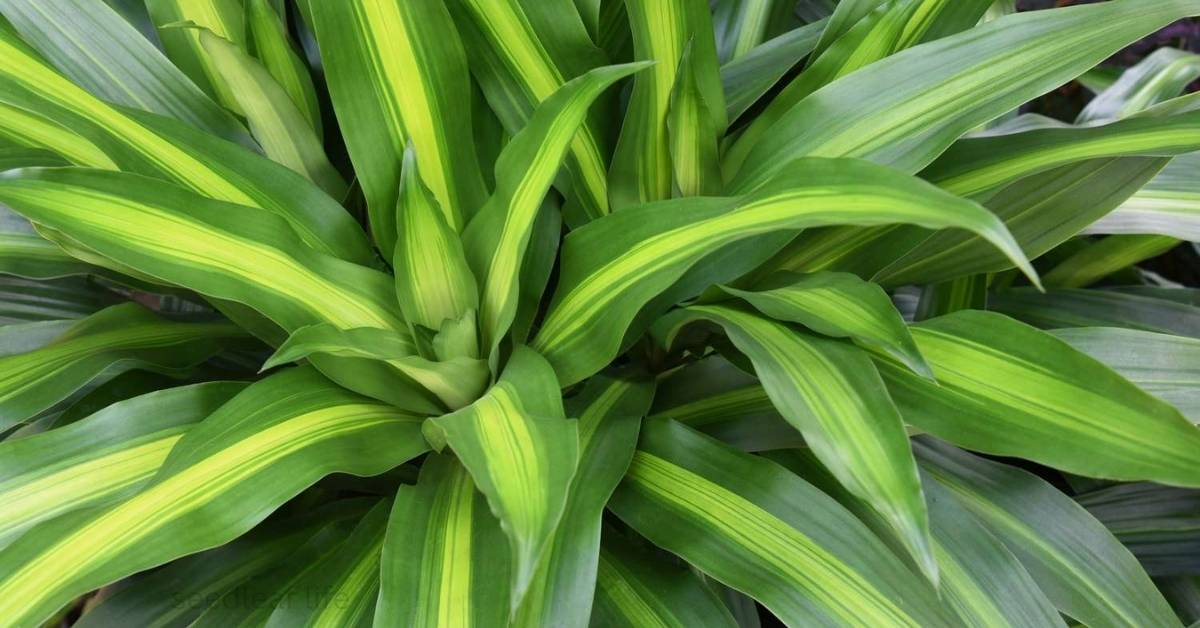
Dracaena plants are among the most popular houseplants in the world, valued for their striking foliage, adaptability, and low-maintenance nature. With their long, arching leaves and cane-like stems, dracaenas add a clean, modern look to homes, offices, and indoor spaces. Despite their reputation for being easy to grow, many people struggle with yellow leaves, brown tips, or slow growth, usually due to improper care.
Understanding proper dracaena care is essential for keeping these plants healthy, vibrant, and long-lived. Light exposure, watering habits, soil choice, humidity, and pruning all play a role in how well a dracaena performs. When cared for correctly, dracaena plants can thrive for many years and grow into impressive statement plants.
In this complete guide, you will learn how to care for dracaena plants step by step, including light requirements, watering schedules, soil needs, fertilizing, pruning, common problems, and answers to the most frequently asked questions. Whether you are a beginner or an experienced plant owner, this guide will help you grow strong, attractive dracaena plants with confidence.
What Is a Dracaena Plant?
Dracaena is a large genus of tropical plants native to Africa, Asia, and Central America. These plants belong to the Asparagaceae family and are known for their upright growth habit, stiff stems, and narrow, sword-like leaves.
Dracaena plants are commonly grown as indoor houseplants, though some species can be grown outdoors in warm climates. They are particularly popular in offices and homes because they tolerate a wide range of indoor conditions and require relatively little attention.
Common dracaena varieties include:
- Dracaena marginata (Dragon Tree)
- Dracaena fragrans (Corn Plant)
- Dracaena reflexa
- Dracaena deremensis
Each variety has slightly different growth habits, but overall care requirements are similar.
Dracaena Light Requirements
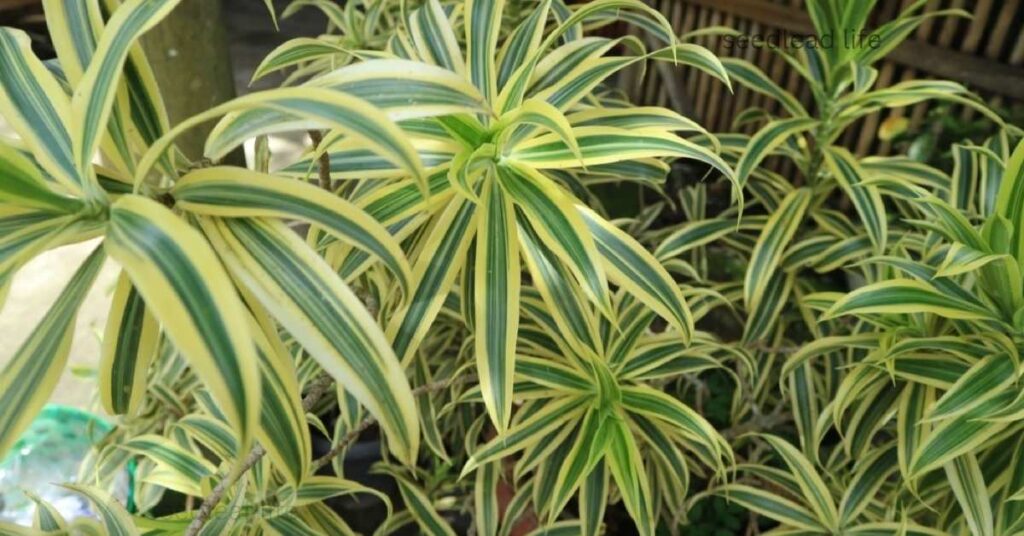
Dracaena light requirements play a major role in successful Dracaena Care and vibrant foliage
Best Light for Dracaena Plants
Dracaena plants prefer bright, indirect light. This type of light encourages healthy leaf color and steady growth without causing damage.
Ideal locations include:
- Near east- or north-facing windows
- A few feet away from bright south- or west-facing windows
Can Dracaena Grow in Low Light?
Yes, dracaena plants can tolerate low-light conditions, which is one reason they are so popular indoors. However, growth will be slower, and leaf color may become less vibrant.
Can Dracaena Handle Direct Sunlight?
Direct sunlight is not recommended. Harsh sun can scorch the leaves, leading to brown or faded patches. If placed near a sunny window, sheer curtains should be used to diffuse the light.
Dracaena Watering Guide
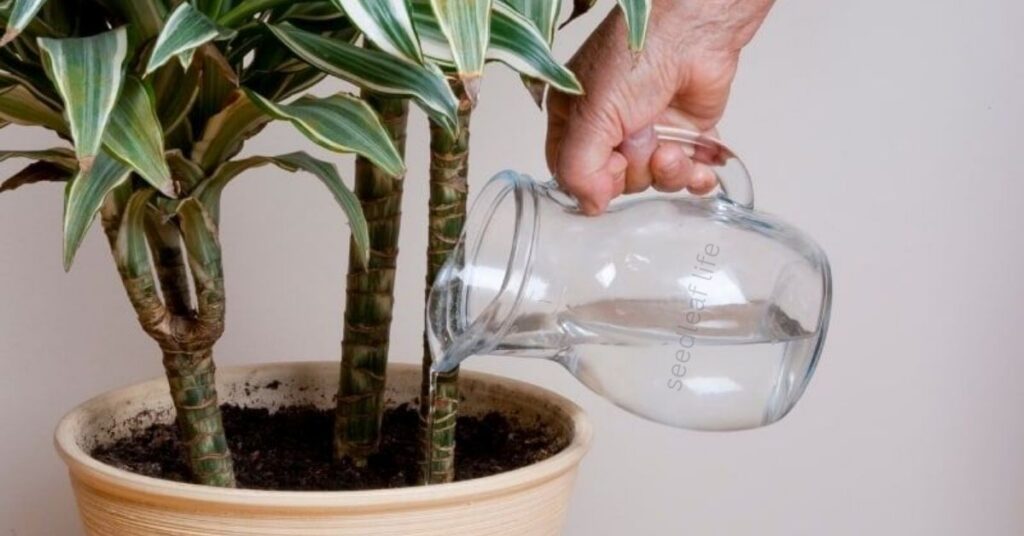
This Dracaena watering guide explains the right watering practices for successful Dracaena Care.
How Often to Water Dracaena
One of the most important aspects of dracaena care is proper watering. Dracaenas prefer soil that dries slightly between waterings.
General watering guidelines:
- Water when the top 1–2 inches of soil are dry.
- Water less frequently in winter.
- Avoid keeping soil constantly wet.
Overwatering is the most common cause of dracaena problems.
Water Quality and Dracaena Sensitivity
Dracaenas are sensitive to fluoride and salts often found in tap water. This sensitivity frequently causes brown leaf tips.
Best practices:
- Use distilled, rainwater, or filtered water
- Allow tap water to sit for 24 hours before use
Soil Requirements for Dracaena
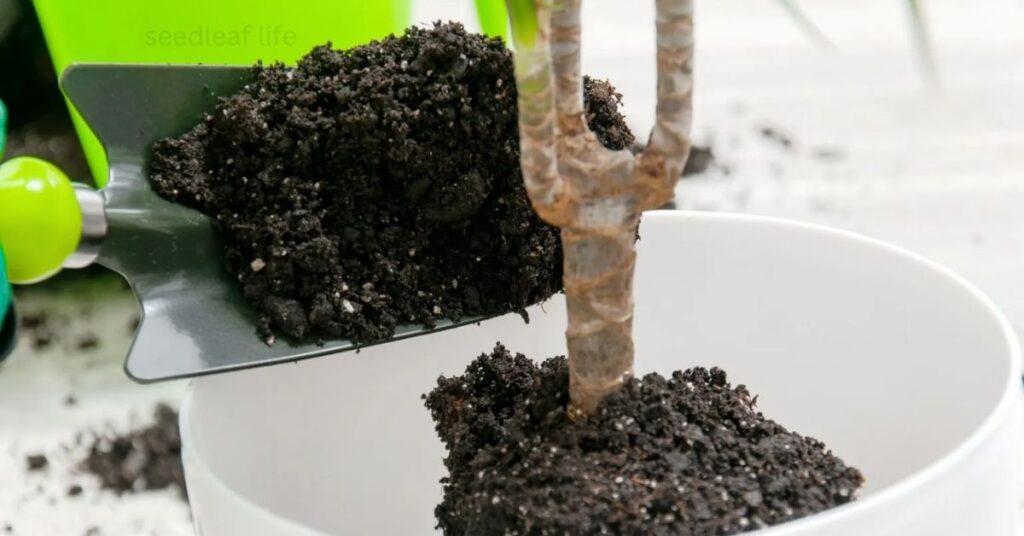
Dracaenas grow best in well-draining, lightweight soil.
Ideal soil characteristics:
- Loose texture
- Good aeration
- Excellent drainage
A high-quality indoor potting mix works well. Avoid heavy garden soil that retains too much moisture.
Dracaena Temperature and Humidity Needs
Maintaining proper temperature and humidity is an important part of Dracaena Care.
Ideal Temperature Range
Dracaenas prefer temperatures between 65–80°F (18–27°C). They do not tolerate cold drafts or sudden temperature changes.
Humidity Requirements
While dracaenas adapt to average indoor humidity, they grow best in moderate humidity.
Ways to increase humidity:
- Use a pebble tray
- Group plants together
- Use a humidifier
Low humidity often leads to brown leaf tips.
Fertilizing Dracaena Plants
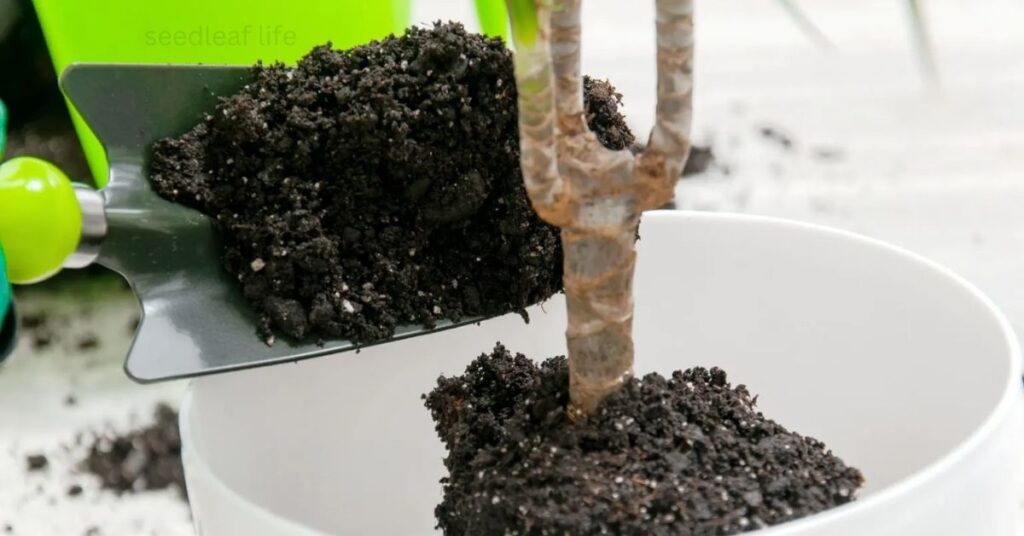
Dracaenas are light feeders and do not require heavy fertilization.
Fertilizing tips:
- Feed every 4–6 weeks during spring and summer.
- Use a balanced, diluted houseplant fertilizer.
- Do not fertilize in fall or winter.
Over fertilization can cause leaf burn and salt buildup.
Pruning and Maintenance
Proper pruning and maintenance help improve growth and overall Dracaena Care.
How to Prune Dracaena
Pruning helps maintain size and encourages branching.
- Cut canes at desired height.
- Remove yellow or damaged leaves.
- Use clean, sharp tools.
Dracaena responds well to pruning and often produces new growth below the cut.
Cleaning Dracaena Leaves
Dust accumulation reduces light absorption. Wipe leaves gently with a damp cloth every few weeks to keep them clean and healthy
Repotting Dracaena
Repotting is an important part of Dracaena Care that helps the plant grow healthy and strong.
When to Repot Dracaena
Dracaenas grow slowly and usually need repotting every 2–3 years.
Signs repotting is needed:
- Roots growing out of drainage holes.
- Water draining too quickly.
- Slowed growth.
Choose a pot only slightly larger than the current one.
Growing Dracaena Outdoors
Dracaena can be grown outdoors in USDA zones 10–12. Outdoor plants prefer partial shade and protection from strong sun and wind.
Common Dracaena Problems and Solutions
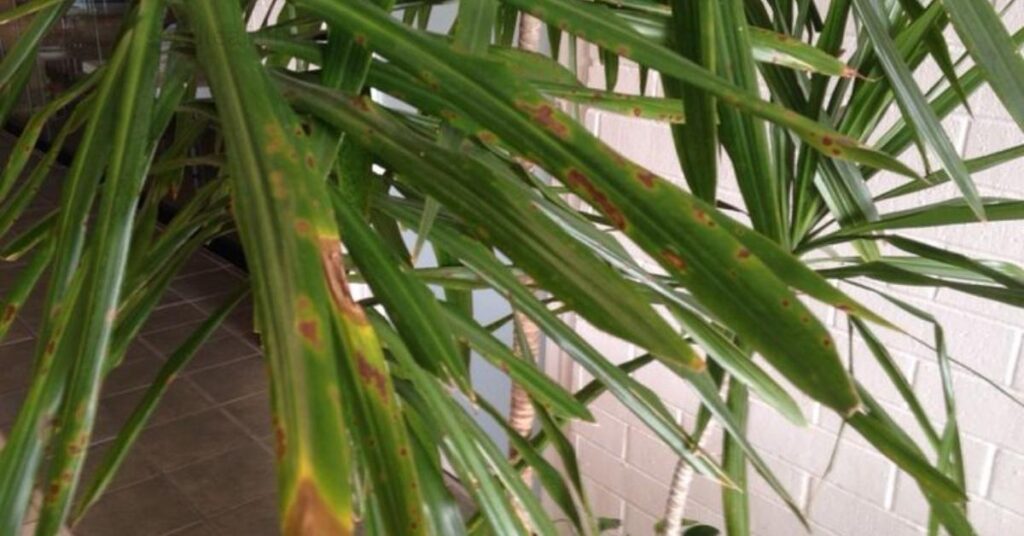
Learn about common Dracaena Care problems and effective solutions to keep your plant healthy.
Yellow Leaves
Causes include:
- Overwatering
- Poor drainage
- Natural aging of lower leaves
Brown Leaf Tips
Most often caused by:
- Fluoride in water
- Low humidity
- Inconsistent watering
Drooping or Soft Stems
Usually indicates overwatering or root rot. Reduce watering and check soil drainage immediately.
Pests
Common pests include:
- Spider mites
- Mealybugs
- Scale insects
Treat with insecticidal soap or neem oil.
Is Dracaena Toxic?
Dracaena plants are toxic to cats and dogs if ingested, causing vomiting and drooling. Keep plants out of reach of pets.
Frequently Asked Questions About Dracaena Care (Detailed)
How Fast Do Dracaena Plants Grow?
Dracaenas are slow to moderate growers, especially indoors.
Can Dracaena Live in Water?
Dracaena cuttings can grow in water temporarily, but long-term growth requires soil.
Why Are My Dracaena Leaves Turning Brown?
Common causes include water quality, low humidity, or overfertilization.
Can I Cut the Top Off My Dracaena?
Yes. Cutting the top encourages branching and controls height.
Do Dracaenas Need Sunlight Every Day?
Yes, but indirect light is best.
How Long Do Dracaena Plants Live?
With proper care, dracaenas can live 10–20 years or more.
Are Dracaena Plants Easy to Care For?
Yes. Dracaena plants are considered low-maintenance houseplants, making them ideal for beginners, offices, and busy plant owners.
Conclusion
Proper dracaena care is simple once you understand the plant’s basic needs. With bright indirect light, careful watering, well-draining soil, and occasional feeding, dracaena plants thrive and add long-lasting beauty to indoor spaces. Their resilience, striking foliage, and adaptability make them one of the best houseplants for both beginners and experienced growers alike.